When Does the Clock Stop in Ice Hockey?
The ice hockey clock stops whenever the referee stops play, including for goals, penalties, icing, offside, the puck leaving the rink and other dead-ball situations.
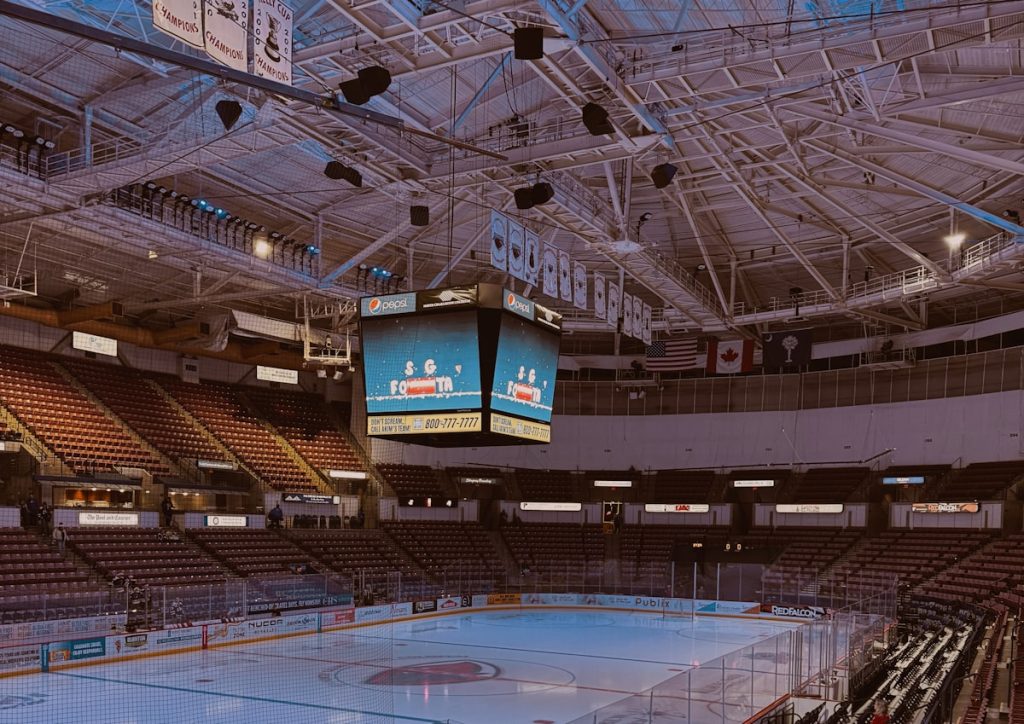
In ice hockey, the game clock normally runs while the puck is in play and stops when an official blows the whistle. That includes routine stoppages such as icing and offside, as well as goals, penalties, injuries and the puck leaving the playing area.
The clock does not stop simply because a player falls, changes lines or carries the puck into the corner. Play must be stopped by the officials, or a scheduled period break must occur. Exact timing procedures can vary slightly between the NHL, IIHF competitions and local leagues, but the basic principle is the same.
Situations that stop the ice hockey clock
- A goal: The clock stops as soon as the referee determines that the puck legally crossed the goal line. The goal is recorded at the time shown on the game clock, and play restarts with a faceoff at center ice.
- A referee’s whistle: Any whistle that ends the play stops the clock. This covers ordinary stoppages, disputed plays and situations where an official loses sight of the puck.
- Icing: Once the linesperson signals icing and play is stopped, the clock is stopped. The next faceoff is normally held in the defending team’s zone, subject to the competition’s icing rules.
- Offside: An offside whistle ends the play and freezes the clock. A delayed offside can allow play to continue, so the clock keeps running until the attacking players clear the zone or another stoppage occurs.
- The puck leaves the rink: If the puck goes over the glass, into the netting or out of bounds, play is stopped and the clock is reset to the stoppage time.
- Penalties: The clock stops when play is whistled dead for a penalty. With a delayed penalty, however, play usually continues and the clock keeps running until the offending team touches the puck or another event stops play.
- Injuries and other safety issues: An official can stop play for an injured player, damaged equipment, a broken skate, ice problems or another safety concern.
- Timeouts and administrative stoppages: A team timeout, official review, measurement of equipment and certain facility or timing issues all occur during a stoppage in play.
When does the clock start again?
The game clock restarts when the official drops the puck for the next faceoff. It does not restart when a player skates into position or when the referee signals that the teams are ready. The timekeeper starts the clock as the puck is legally put into play.
After a goal, the clock remains stopped while the goal is announced and the teams prepare for the center-ice faceoff. Following a penalty, it stays stopped until the next faceoff. During a normal stoppage, the same restart principle applies.
Does the clock stop for every whistle?
In standard organized ice hockey, yes: a whistle means the puck is no longer live, so the game clock should stop. The whistle may be for icing, offside, a hand pass, a high stick, a covered puck or a different rule violation.
There can be a short delay between the official’s whistle and the visible clock display stopping. The timekeeper may need to react, and officials can correct the clock if it runs after play has ended. This is why the displayed time can occasionally be adjusted during a stoppage.
Delayed penalties and the running clock
A delayed penalty is the main situation that confuses viewers. When an official raises an arm for a delayed penalty, play has not necessarily stopped. The non-penalized team can pull its goaltender and keep attacking, so the clock continues to run.
The clock stops when the team about to be penalized gains control of the puck, when the puck enters the goal under the applicable rules, or when another reason for a whistle occurs. After the stoppage, the penalty is assessed and the next faceoff takes place according to the rules of the competition.
Period breaks, overtime and stoppage-time differences
The clock stops at the end of each regulation period. In most full-length games, the intermission follows a period with a scheduled break, and the clock is set for the next period rather than continuing from the previous one.
Overtime uses the same basic stop-clock system: the clock runs during live play and stops at whistles, goals and other dead-ball events. If overtime ends with a goal, the clock stops immediately and the game is over under the applicable format.
Professional leagues, international tournaments, junior hockey and recreational competitions can differ in period length, intermission timing, timeout rules and the use of commercial breaks. Those differences affect the schedule, not the central rule that the clock runs only during live play.
Common questions about the hockey game clock
Does the clock stop when the puck hits the post?
No. If the puck hits the post and remains in play, the clock continues. It stops only if an official blows the whistle or the puck crosses the goal line for a legal goal.
Does the clock stop during a line change?
No. Players may change during live play, and the game clock keeps running. Line changes made during a stoppage happen while the clock is already stopped.
Does icing stop the clock in hockey?
Yes. A standard icing call ends play, so the clock stops. If an official waves off icing, play continues and the clock does not stop unless another whistle follows.
Does the clock run during a power play?
Yes. A power play does not create a separate game clock. The main game clock runs while the puck is live, and it stops during whistles. The penalty timer is a separate countdown and continues according to the penalty rules.
Why can the clock be changed after a whistle?
If the timekeeper does not stop the clock at the exact moment play ended, officials can correct it. Video review or an official’s ruling can also establish that a goal or stoppage occurred earlier than the initial display showed.