What Does a Defenseman Do in Ice Hockey?
A defenseman protects the defensive zone, stops scoring chances, moves the puck out of danger and supports attacks without losing defensive position.
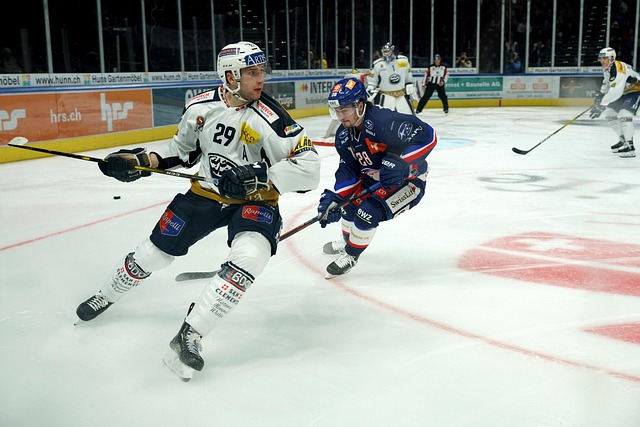
A defenseman in ice hockey protects the area in front of their own net, limits the opponent’s scoring chances and helps move the puck up the ice. Defensemen also support the attack by making passes, joining rushes and taking shots from the blue line. Their central responsibility is to create offense without leaving the team exposed defensively.
What is a defenseman responsible for?
The two defensemen on the ice usually work together with the goaltender and three forwards. Their duties change depending on where the puck is, but the main responsibilities remain consistent.
- Protect the net: Defensemen cover the space around the crease and prevent opponents from getting clear shots or rebounds.
- Defend the slot: They protect the high-danger area between the faceoff circles, where many goals are scored.
- Challenge attackers: A defenseman angles opponents toward the boards, blocks passing lanes and contests shots without taking unnecessary penalties.
- Win puck battles: Along the boards and behind the net, defensemen use positioning and strength to regain possession.
- Start the breakout: After recovering the puck, they make the first pass to a forward or carry the puck out of the defensive zone.
What does a defenseman do when the opponent has the puck?
Defensive play begins with positioning. A defenseman normally stays between the attacking player and the net, keeping their body and stick in the passing lane. The goal is not always to hit the puck carrier. Containing the rush, forcing a poor angle or delaying the attack can be just as effective.
During an odd-man rush, such as a two-on-one, the defenseman usually protects the pass to the more dangerous option while trying to pressure the puck carrier. Near the net, the defenseman identifies a covered opponent, ties up their stick and clears loose pucks away from the crease.
In the defensive zone, communication is essential. One defenseman may pressure the puck in the corner while the other stays in front of the net or covers the slot. Poor communication can leave an attacker unmarked for a quick pass or rebound.
How does a defenseman help the attack?
A defenseman’s offensive role begins with a clean first pass. Moving the puck quickly can turn a defensive recovery into a controlled breakout. Depending on the team’s system, the defenseman may pass to a nearby center, send the puck up the boards or skate it out of danger.
Defensemen also contribute in the offensive zone by keeping the puck inside the blue line, creating shooting lanes and passing to forwards in scoring areas. A shot from the point can produce a rebound, a deflection or a screen in front of the goaltender.
When a defenseman joins the rush, they must recognize when to retreat. A strong offensive play is not useful if it gives the opponent an uncontested breakaway. Many systems require one defenseman to support the attack while the other stays back as a safety option.
What is the difference between a left defenseman and a right defenseman?
Left defensemen and right defensemen have the same basic job, but their side of the ice affects puck handling and defensive coverage. A defenseman often prefers to receive and pass the puck on their stronger side, especially under pressure along the boards.
Teams usually pair a left-shot defenseman with a right-shot defenseman when possible. This arrangement can make breakout passes and puck retrievals more natural, although coaches also consider skating, communication, defensive awareness and chemistry.
What is the difference between an offensive and defensive defenseman?
The labels describe tendencies rather than completely separate positions.
- Defensive defenseman: Usually specializes in net-front coverage, blocking shots, winning battles, penalty killing and stopping rushes.
- Offensive defenseman: Often contributes more through skating, puck movement, point shots, power-play passing and joining attacks.
- Two-way defenseman: Provides reliable play in both zones and can adapt to different game situations.
Modern hockey values defensemen who can make fast decisions with the puck. Even a defense-focused player must usually pass effectively, skate under pressure and understand when to support the attack.
Which skills does a good defenseman need?
The most important defenseman skills are closely connected to decision-making:
- Positioning: Staying between the opponent and the net reduces dangerous chances.
- Skating: Backward skating, pivots and quick acceleration help a defenseman defend the rush.
- Stick checking: An active stick can disrupt passes and poke the puck away without a penalty.
- Puck control: Calm handling behind the net and along the boards makes breakouts more reliable.
- Passing: Accurate first passes help the team leave its zone with control.
- Awareness: Defensemen must track the puck, open opponents, teammates and possible counterattacks at the same time.
- Communication: Clear calls help defensive partners and forwards understand who pressures the puck and who provides coverage.
Can a defenseman score goals?
Yes. Defensemen can score with point shots, wrist shots through traffic, one-timers on the power play, rebounds and rushes into the offensive zone. Their opportunities often depend on getting the puck through screens and choosing safe moments to move below the faceoff circles.
Scoring is useful, but it does not replace defensive responsibility. A defenseman who produces points but regularly loses coverage can hurt the team. Coaches evaluate the full role, including goals prevented, puck movement, penalty killing and transition play.
Common questions about the defenseman position
How many defensemen are on the ice in hockey?
A team normally has two defensemen on the ice at even strength, alongside three forwards and one goaltender. Teams can use more or fewer players at times because of penalties, delayed penalties or a pulled goaltender.
Do defensemen have to be big?
Size can help with net-front battles and physical play, but it is not a requirement. Strong skating, positioning, timing and puck skills allow many defensemen to defend effectively without relying on size alone.
Do defensemen fight in ice hockey?
Physical contact is part of hockey, but fighting is not the main purpose of the position. A defenseman’s priority is to prevent scoring chances, protect teammates within the rules and move the puck efficiently. Taking unnecessary penalties can leave the team shorthanded.
What does a defenseman do on the power play?
On the power play, a defenseman often plays at the blue line. They move the puck, switch sides to create passing lanes, shoot through traffic and help keep possession inside the attacking zone. The defenseman must still be ready to retreat if the puck is lost.