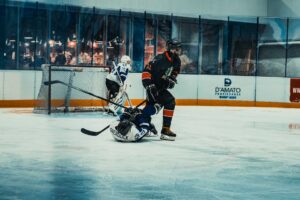
What Are the Positions in Ice Hockey?
Learn what each ice hockey position does, including the goaltender, defensemen, centers, and wingers, plus how roles change during play and special teams.
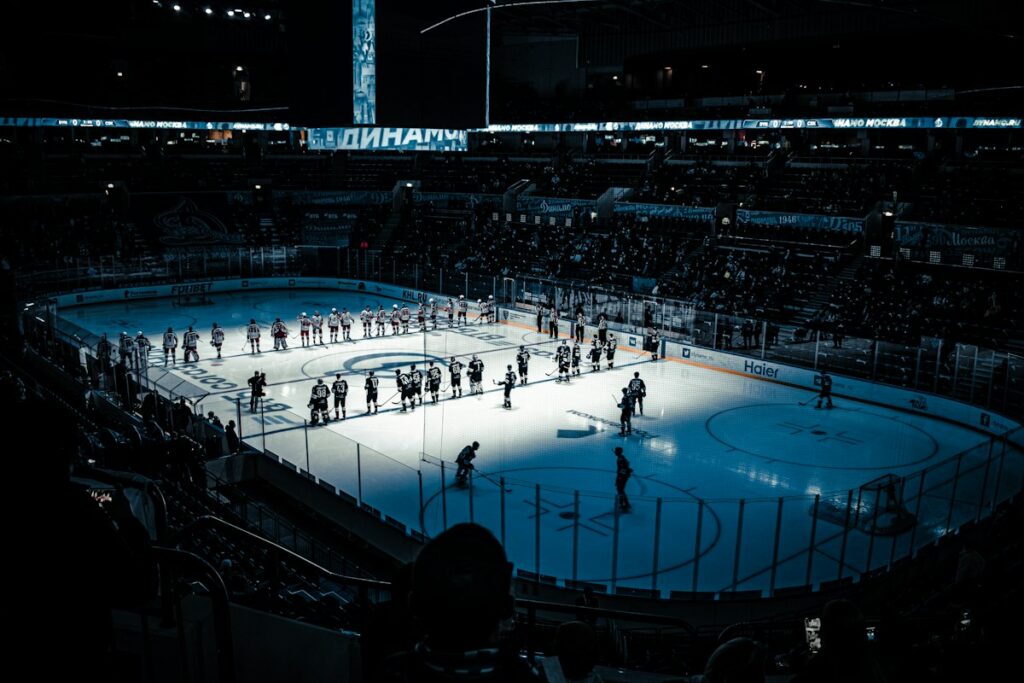
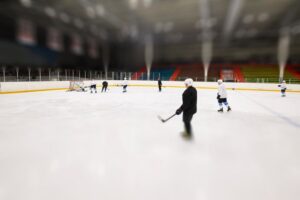
Ice hockey has six players on the ice for each team: one goaltender and five skaters. The skaters are usually divided into two defensemen and three forwards: one center and two wingers. Each position has a main responsibility, but players must often switch roles quickly as the puck moves between the attacking and defending zones.
The main ice hockey positions
Goaltender
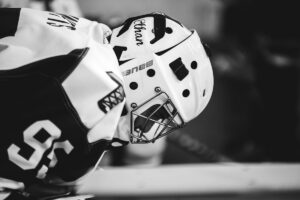
The goaltender, also called the goalie or netminder, protects the net. Their primary job is to stop shots before the puck crosses the goal line. Goalies also control rebounds, communicate with defensemen, and may pass or move the puck to start an attack.
Unlike other players, the goaltender wears specialized equipment, including leg pads, a blocker, a catching glove, a mask, and extra body protection. A team normally uses one goalie during play and keeps a backup on the bench.
Defensemen
Two defensemen are normally on the ice. They are often described as the left defenseman and right defenseman, although players can move across the ice as the play develops.
Defensemen protect the area in front of their net, block shots, challenge attackers, and clear the puck from danger. When their team has possession, they support the forwards by making passes, carrying the puck out of the defensive zone, and taking shots from the blue line. A defensive defenseman may focus more on coverage and physical play, while a puck-moving or offensive defenseman may contribute more to transitions and scoring chances.
Center
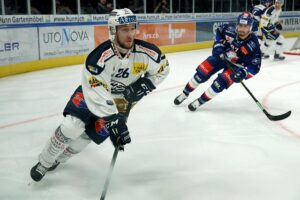
The center plays in the middle of the forward line and takes faceoffs. This position usually covers the largest area of the ice because the center helps both wingers in the offensive zone and supports the defense in the defensive zone.
A center is expected to create passing options, carry the puck through the neutral zone, win or compete for faceoffs, and track opposing players. Strong two-way centers contribute at both ends of the rink rather than concentrating only on scoring.
Left wing and right wing
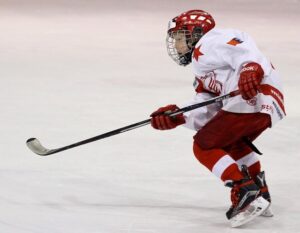
The left wing and right wing play on the sides of the center. Their usual attacking responsibilities include entering the offensive zone, creating passing lanes, shooting, and battling for the puck along the boards. Wingers also screen the opposing goalie and look for rebounds near the crease.
In their own zone, wingers cover opposing players and help defensemen move the puck out. The exact side a winger plays may affect where they prefer to receive passes or shoot, but modern hockey allows wingers to switch sides and move into open space.
How hockey positions work during a game
Positions describe responsibilities rather than fixed locations. Players skate constantly, so a center may drop deep to help a defenseman, a winger may move toward the middle, and a defenseman may join an attack. The team must maintain coverage while adapting to the puck and the opponent.
Forwards, defensemen, and line changes
The center and wingers form a forward line. Two defensemen form a defensive pairing. Coaches usually rotate several forward lines and defensive pairings during a game so players can recover between shifts. A typical shift lasts less than a minute, although its length depends on the pace of play and the situation.
Players change while play is active, known as a line change, or during a stoppage. A poorly timed change can leave the team with too many players committed forward or create an open attacking lane for the opponent.
Positions on offense and defense
In the offensive zone, forwards try to create chances around the net while defensemen support from the blue line and protect against counterattacks. In the defensive zone, all five skaters help protect the slot, cover opponents, and recover loose pucks.
The center commonly helps below the faceoff circles, wingers cover the sides, and defensemen manage the area closest to the net and the points. These assignments can change based on the team’s system, the location of the puck, and which opponent has possession.
Special teams positions
Power-play and penalty-killing units use different combinations from the usual five-on-five lineup.
On a power play, a team may use four forwards and one defenseman, or three forwards and two defensemen. Common roles include a player at the point, a net-front player, a puck distributor, and a shooter prepared for a one-timer. The goaltender remains in net unless the team replaces the goalie with an extra attacker.
During a penalty kill, teams usually use two forwards and two defensemen. The priority is to protect the middle of the ice, block passing lanes, clear the puck, and force the power-play team to attack from less dangerous areas. Penalty-killing forwards must pressure the puck while still recovering to the defensive zone.
Which ice hockey position is hardest?
No single position is hardest for every player. Goaltending requires quick reactions, positioning, concentration, and the ability to recover after a mistake. Center demands extensive skating, faceoff skill, defensive awareness, and playmaking. Defense requires strong reading of the play, body positioning, puck control, and reliable decision-making under pressure.
Winger can be a natural starting position because the player usually has clearer side-of-ice responsibilities, but wingers still need to defend, make quick passes, and support the center. At youth and recreational levels, players often try several positions before settling into the role that best matches their skating, shooting, passing, and defensive strengths.
Frequently asked questions about hockey positions
How many positions are there in ice hockey?
There are six players on the ice, but the main position names are goaltender, defenseman, center, left wing, and right wing. Since two defensemen play together and three forwards form a line, teams commonly describe the lineup as one goalie, two defensemen, and three forwards.
What is the difference between a forward and a defenseman?
Forwards—centers and wingers—usually create most of the team’s attacking chances. Defensemen focus more on protecting their net and starting breakouts, although both groups contribute in every zone and can score.
Can hockey players change positions?
Yes. Players can switch positions during a game when the play requires it, and some athletes train or compete at more than one position. The team’s structure still depends on players understanding their coverage responsibilities.