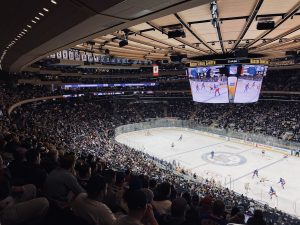
What Is the Blue Line in Ice Hockey?
The blue lines divide the ice rink into three zones and determine when attacking players are offside. Learn how they work, why puck position matters, and how the markings affect play.
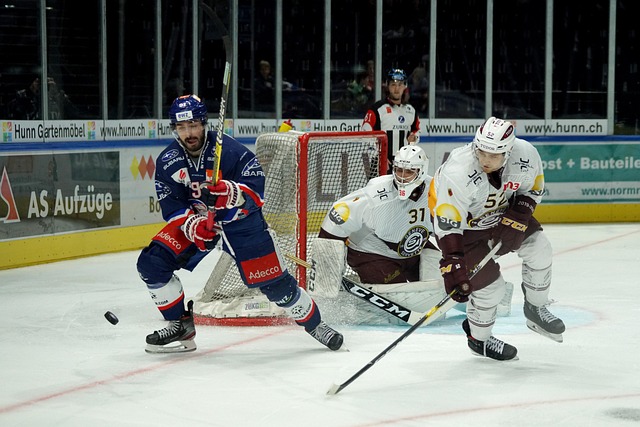
The blue line in ice hockey is one of the two painted lines that divide the rink into three sections: the defending zone, the neutral zone, and the attacking zone. Its main purpose is to define the boundaries used for offside decisions, but it also helps players, officials, and spectators understand where the puck is on the ice.
Where the blue lines are located
An ice hockey rink has two blue lines, with one positioned near each end. Each line separates the neutral zone from a team’s end zone. The area between the two blue lines is the neutral zone, while the space between a blue line and the end boards contains a team’s defending or attacking zone depending on which team has possession.
The blue lines run across the width of the rink. Together with the red center line, goal lines, and faceoff markings, they create the basic visual structure of the playing surface. A team attacks the zone beyond the opponent’s blue line and defends the area behind its own blue line.
How the blue line determines offside
The most significant function of the blue line is its role in the offside rule. A team enters the attacking zone legally only when the puck crosses the blue line before the attacking players do. The puck must completely cross the line into the attacking zone; touching the line is not enough.
At the moment the puck completely crosses the blue line, every attacking player must still have at least one skate on or behind the line, or must be in contact with the line. A player whose skates have already crossed into the attacking zone before the puck is there is offside. The player’s stick and other equipment do not determine whether the player is onside; the relevant position is generally the location of the skates.
This explains why players often pause at the blue line while waiting for a pass. A forward may keep one skate on the line while the puck carrier enters the zone. Once the puck has legally crossed, the other players can follow without creating an offside violation.
Why puck position matters more than stick position
Offside is based on the relationship between the puck, the blue line, and the players’ skates. A player can reach across the line with a stick without being offside if the player’s skates remain onside. Conversely, a player can be offside even without touching the puck if both skates have entered the attacking zone too early.
The puck is considered to have entered the zone only after it completely crosses the blue line. This detail matters in close plays, especially when the puck is deflected, carried on a stick blade, or held near the edge of the line. Video review may be used in some competitions to determine whether the puck crossed fully and whether a player’s skate was still onside.
How players use the blue line tactically
The blue line is not just a boundary for officials. It is a tactical reference point for both teams. Attackers try to maintain possession inside the offensive zone, where they can cycle the puck, create shots, and force defenders to protect the net. Defenders try to prevent a clean entry or clear the puck beyond the blue line.
Defensemen commonly play near the attacking blue line to keep the puck in the zone. They must read the play carefully: moving too far forward can create an offside situation, while backing away too early can give the opposing team space to exit. A controlled entry, in which a team carries or passes the puck across the line while maintaining possession, is generally different from simply shooting the puck deep and chasing it.
The blue line also affects line changes. A team that loses possession may try to move the puck out of its defensive zone before changing players. If the puck is cleared beyond the attacking blue line, the attacking team may need to regroup in the neutral zone before entering again without an offside violation.
Blue line, icing, and zone boundaries
The blue line itself is not the primary boundary used to judge icing. Icing decisions usually involve the center red line, the goal line, and the relative positions of the players. However, the blue lines still matter because they show where the neutral zone ends and where an attacking team must legally establish possession.
A puck that is shot from behind a team’s own side of the center line and travels untouched across the opponent’s goal line may produce an icing call, subject to competition rules and exceptions. That is a separate rule from offside, even though both situations involve teams trying to move the puck through marked zones.
Are blue-line rules the same in every league?
The basic purpose of the blue lines is consistent across organized ice hockey: they separate the neutral zone from the two end zones and help define offside. Details can vary between leagues and governing bodies, including rink dimensions, video-review procedures, faceoff locations, and how certain delayed offside situations are handled.
Some competitions use a delayed offside interpretation. If attacking players enter the zone before the puck, they may be allowed to clear the zone while the defending team controls the puck. The offside is then considered nullified if all attacking players leave the zone before the team regains possession or re-enters with the puck. The exact application depends on the rules of the competition.
Common misconceptions about the blue line
- It is not the center line. The red center line divides the rink in half. The two blue lines sit on either side of it.
- A player does not have to touch the blue line. A skate may remain on or behind the line, depending on the player’s position when the puck enters the attacking zone.
- The puck must completely cross the line. If part of the puck remains over the blue line, the puck has not fully entered the zone.
- Offside is not the same as icing. Offside concerns the timing of players entering the attacking zone. Icing concerns a particular type of long-distance shot and where it crosses the goal line.
Frequently asked questions
How many blue lines are on an ice hockey rink?
There are normally two blue lines. Each one separates the neutral zone from an end zone.
What happens if a player is offside?
Play is stopped, and a faceoff is held at a location determined by the applicable rules. The result is not usually a penalty in the same sense as an illegal hit or tripping infraction.
Can a player be onside with one skate over the blue line?
A player may be onside if at least one skate remains on or behind the blue line when the puck completely enters the attacking zone. The precise rule wording and video-review standards can vary by competition.
Why do defensemen stand at the blue line?
They often hold the puck inside the offensive zone, support attacks, block passing lanes, and create shooting opportunities from the point. They must avoid entering too early and causing an offside play.