What Is Backchecking in Ice Hockey? Roles, Techniques, and Common Mistakes
Backchecking in ice hockey is the defensive effort to recover toward your own zone after possession changes. Learn how it works, why the middle of the ice matters, and how effective backcheckers limit scoring chances.
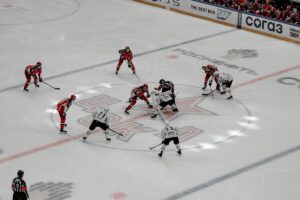
Backchecking in ice hockey is the defensive work a team performs immediately after losing possession. Players who were attacking skate back toward their own goal, identify threats, pressure the puck carrier, and help prevent a dangerous scoring chance. It is a transition skill rather than simply a race to the defensive zone.
The main purpose of backchecking is to make the opponent’s attack slower, less organized, and less dangerous before the defending team can establish its normal defensive structure. A successful backcheck may lead to a takeaway, force the puck to the outside, disrupt a passing lane, or give teammates enough time to get into position.
How backchecking works
Backchecking begins at the moment a team loses the puck. The nearest player often applies immediate pressure, while the other skaters recover into useful defensive positions. Players must quickly determine three things: where the puck is, which opponent is the greatest scoring threat, and how much defensive support is available.
The first priority is usually the middle of the ice. An attacking player entering through the centre lane has more options than one carrying the puck along the boards. The middle provides better shooting angles and allows passes to reach teammates on either side. A backchecker therefore tries to protect the inside lane before chasing the puck carrier directly.
Effective backchecking commonly involves these actions:
- Immediate reaction: The player changes from an attacking mindset to a defensive one as soon as possession is lost.
- Inside positioning: The skater stays between an opponent and the net, especially in the central lane.
- Threat identification: The backchecker tracks the most dangerous opponent rather than automatically following the puck.
- Stick pressure: The stick is used to challenge a passing lane, disrupt a reception, or pressure the puck carrier without relying on an uncontrolled body check.
- Angling: The defender guides the puck carrier toward the boards or a less dangerous route.
- Communication: Teammates call out assignments, open players, and changes in coverage.
The backchecker does not always need to take the puck away. Delaying a rush for a few seconds can allow a defenceman to gain inside position and the rest of the team to recover. That delay may be the difference between a controlled defensive entry and an odd-man rush.
Backchecking compared with forechecking
Forechecking is pressure applied in the opponent’s zone after the other team has possession. The aim may be to force a turnover, prevent a clean breakout, or keep the puck in the attacking zone. Backchecking happens during the defensive transition after a team has lost possession and is attempting to stop the opponent’s attack.
The two skills are connected. Aggressive forechecking can create turnovers, but if the puck is moved past the pressure, the forwards must backcheck immediately. A team that attacks effectively but does not recover quickly can give up odd-man rushes. A team with disciplined backchecking can survive an unsuccessful forecheck by reducing the quality of the opponent’s next opportunity.
Why the first few seconds matter
The period immediately after a turnover is often called the defensive transition. At that moment, players may be spread across the ice and facing different directions. The opponent can attack before the defending team has established coverage, making quick recognition especially valuable.
A forward who turns back early can remove a passing option before the puck reaches the offensive zone. A forward who watches the puck and remains high in the attacking zone may leave a trailing opponent unmarked. This is why coaches often assess backchecking by looking at reaction time, routes, and coverage decisions rather than only at visible puck battles.
Backchecking also reduces the workload on defencemen. If a forward tracks a dangerous opponent through the middle, the defenceman can focus on the puck carrier and maintain a better gap. If the forward fails to recover, the defenceman may have to defend two attackers at once.
Common backchecking responsibilities
Assignments vary by system, but several responsibilities appear in many ice hockey defensive structures.
The closest player to the puck
The nearest skater may pressure the puck carrier, particularly if that pressure can slow the rush without taking the player out of the play. The player must avoid overcommitting and opening a direct passing lane behind the pressure.
The supporting forwards
Other forwards generally recover through the middle and pick up opponents entering as passing threats. Their role is not simply to skate toward the net. They must scan the ice, match speed with an opponent, and remain available to help the defencemen.
The defencemen
Defencemen typically manage the space closest to the net and attempt to maintain an appropriate gap from the puck carrier. They must read the backchecker’s position before deciding whether to challenge the puck, protect the slot, or guard a potential pass.
What makes a backcheck effective?
Speed helps, but it is only one part of a good backcheck. A fast player who takes a poor route may arrive late to the important area. Efficient backcheckers turn quickly, accelerate in a straight defensive route, and keep their body positioned to see both the puck and their assigned opponent.
Awareness is equally important. Players need to recognize whether the rush is even, odd-man, or supported by a late attacker. They also need to understand the location of teammates. Chasing the puck when another defender already has pressure can leave an uncovered player in the slot.
Stick position has a practical effect. A stick placed in the passing lane can force the puck carrier to hold the puck longer or choose a less dangerous pass. Players should still avoid reaching recklessly, because a failed poke check can pull them out of position.
Common backchecking mistakes
- Watching the puck instead of tracking a threat: This allows an opponent to enter behind the defender.
- Taking a wide route: Skating around the outside may look fast but can surrender the middle lane.
- Stopping after a failed offensive play: A missed pass or lost puck requires an immediate defensive reaction.
- Overcommitting to the puck carrier: This can create an uncontested passing option.
- Arriving without control: A player who reaches the play at full speed but cannot contain the attack may worsen the defensive situation.
- Assuming someone else has coverage: Communication is needed before players exchange assignments or leave an opponent.
Frequently asked questions about backchecking
Is backchecking only done by forwards?
No. Forwards often perform the longest recovery skates because they are frequently deeper in the offensive zone, but every skater has a transition responsibility. Defencemen also recover, communicate, protect the net, and manage the rush.
Does backchecking mean chasing the puck?
Not necessarily. The best backchecking route often protects the middle and covers a dangerous opponent first. Direct pressure on the puck is useful only when it does not abandon a more important passing lane or scoring threat.
What is a backcheck goal?
There is no single required outcome. A backcheck succeeds when it helps prevent or reduce the quality of an opponent’s attack. A takeaway is one result, but forcing the puck wide, delaying the rush, blocking a pass, or allowing teammates to recover can also represent effective backchecking.
Why is backchecking important in ice hockey?
Backchecking connects offensive play with defensive responsibility. It limits odd-man rushes, protects high-danger areas near the net, and gives the team time to organize. Because possession changes quickly in hockey, the ability to recover immediately can influence the result of a shift as much as an individual offensive play.