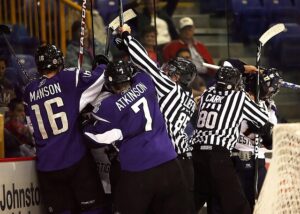
What Is Checking in Ice Hockey? Rules, Types and Penalties
Checking in ice hockey is controlled body contact used to separate an opponent from the puck. Learn how legal checks work, which contact is penalized, and how checking rules vary by league and age group.
Checking in ice hockey is controlled body contact used to separate an opponent from the puck, stop a scoring chance, or gain possession. A legal check is delivered within the rules, usually with the shoulder or hip, while the player keeps control of their balance and avoids dangerous contact.
Checking is not simply hitting another player. The location of the contact, the position of the puck, the direction of the play, and the part of the body used all determine whether a play is legal. Rules also differ between leagues, age groups, and forms of hockey.
How checking works in ice hockey
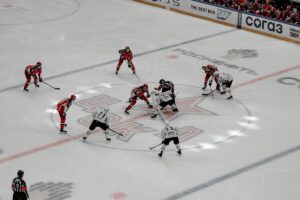
A player typically checks an opponent who is carrying the puck or has just released it. The purpose is to disrupt the play rather than to cause injury. A defender may use their body to pin an attacker against the boards, force them away from the puck, or remove their path to the net.
Players prepare for contact by keeping their knees bent, maintaining a strong skating position, and watching the developing play. A legal shoulder check generally makes contact with the opponent’s upper body, not the head. A hip check uses the hips or lower body to stop an opponent’s progress, while a board check traps a player against the boards during a puck battle.
Good checking also includes positioning. A defender who takes away the middle of the ice can often regain possession without a hard collision. In that sense, body contact and defensive angling are related but not identical: angling uses skating and positioning to limit options, while checking involves physical contact.
What makes a check legal?
The exact standard depends on the rulebook, but legal checking usually requires several conditions:
- Contact is aimed at the body: The check is not directed at the head, neck, knees, or another vulnerable area.
- The player is involved in the play: A hit well after the puck has left the area may be penalized as late contact.
- The checker uses a permitted part of the body: Shoulder-to-shoulder or hip-to-body contact may be allowed, while an elbow, stick, or extended knee can make the play illegal.
- The checker does not leave their feet: Jumping into a hit or launching upward can lead to a penalty.
- The contact is controlled: Excessive force, dangerous intent, or a reckless approach can make an otherwise ordinary body check illegal.
Players must also be aware of vulnerable situations. An opponent facing the boards or reaching for the puck may be unable to protect themselves. Driving that player into the boards from behind is commonly penalized and can result in a major penalty or game misconduct.
Common types of checking
Shoulder check: The checker uses the shoulder to make controlled contact with the opponent’s torso. The head must not be the primary point of contact.
Hip check: The player lowers their body and uses the hip or lower body to interrupt the opponent’s skating lane. Timing and balance are essential because a mistimed hip check can trip the opponent or cause an awkward fall.
Board check: The contact occurs near the boards, often during a battle for the puck. The player receiving the check must not be pushed dangerously from behind or driven headfirst into the boards.
Open-ice check: This happens away from the boards, where both players have more space to skate. Open-ice contact can be legal, but an unexpected hit to a player who is no longer involved in the play may be called late.
Body check without the puck: In some situations, a player may legally finish contact immediately after an opponent releases the puck. The allowed timing is limited, and a prolonged or distant hit can become interference.
Illegal checks and related penalties
Officials assess more than whether a collision occurred. They consider the checker’s position, the opponent’s awareness, the point of contact, and the amount of force. Common infractions include checking from behind, boarding, charging, elbowing, kneeing, and illegal contact to the head.
Checking from behind occurs when a player is hit from the rear and cannot reasonably protect themselves. Boarding involves dangerous contact that sends or drives an opponent into the boards. Charging usually involves taking too many strides, jumping, or otherwise building excessive momentum before making contact.
A player can also be penalized for interference if they prevent an opponent from moving or playing the puck without being legally engaged in the play. Depending on the severity and the competition’s rules, an infraction may result in a minor penalty, major penalty, misconduct, game misconduct, or disciplinary review.
Do all ice hockey leagues allow checking?
No. Checking rules vary substantially. Professional and many adult men’s leagues generally permit body checking under defined conditions. Youth hockey often delays or restricts body checking, particularly for younger age groups, to reduce injury risk and teach puck skills first.
Women’s hockey rules and international competitions may also apply different standards from some professional men’s leagues. In many non-checking formats, intentional body contact is restricted even though incidental contact during normal skating and puck battles can still occur.
Players should follow the rulebook for their specific competition rather than assume that a check legal in one league is legal everywhere. Coaches and officials also teach age-appropriate techniques, including how to approach the boards, absorb contact, and keep the head up while skating.
Why checking is part of the game
Legal checking can change possession, close passing lanes, protect teammates, and create space for an attacking play. It is one defensive tool among several, alongside stick checking, body positioning, forechecking, and backchecking.
The best defenders do not chase collisions. They choose the right angle, arrive under control, and make contact only when it improves the team’s position. A check that removes an opponent but leaves the defender out of position may be less useful than a controlled play that keeps the puck carrier contained.
Frequently asked questions
Is checking the same as hitting?
In everyday hockey language, the terms are often used interchangeably. Technically, checking describes a broader defensive action that can include body contact, stick checks, and positioning. A body check is one specific type of check.
Can you check a player who does not have the puck?
Only in limited circumstances, and the player generally must still be actively involved in the play. Contact against a distant or uninvolved opponent can be called interference. A hit delivered long after a pass or shot may also be penalized as late contact.
Is a check to the head legal?
No. A player must not target or make the head the primary point of contact. Accidental contact can still be penalized depending on the circumstances and the rulebook in use.
What should a player do when approaching the boards?
Keep the head up, maintain a stable skating position, protect the puck, and avoid turning the back toward an approaching opponent at the last moment. Players should also know the location of the boards and be prepared to absorb legal contact safely.