What Is a Minor Penalty in Ice Hockey?
A minor penalty in ice hockey usually sends a player to the penalty box for two minutes and leaves their team short-handed. Learn how it works, which fouls qualify, and what exceptions can change the result.
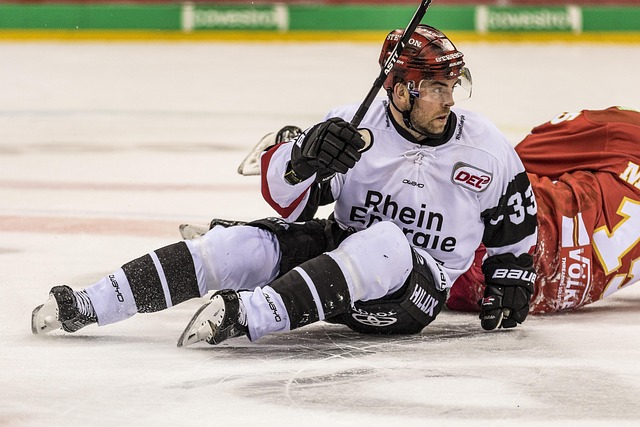
A minor penalty in ice hockey is a rules violation that normally places the offending player in the penalty box for two minutes. During that time, the player’s team usually plays with one fewer skater, giving the opponent a power play.
The exact wording and enforcement can vary between leagues and rule books, but the basic purpose is consistent: to penalize less serious infractions without ejecting the player from the game.
How a minor penalty works
When an official calls a minor penalty, play may stop immediately or continue under a delayed-penalty signal. If the non-offending team has possession, the referee may wait to stop play so that team can keep its attacking advantage. The stoppage occurs when the penalized team gains control of the puck or play otherwise ends.
After the whistle, the penalized player serves the penalty in the box. In the common situation, the opposing team receives a power play and the penalized team defends at even strength with one skater missing. A minor penalty is normally released when the opponents score, although the specific rule can depend on the competition and the type of penalty.
For example, if a defender trips an attacking player and receives a two-minute minor penalty, the defender sits out while the other team adds an extra skater for the power play. If the power-play team scores before the two minutes expire, the minor penalty will usually end early.
Which infractions can be minor penalties?
Common minor penalties include tripping, hooking, holding, interference, slashing, and some forms of high-sticking. A player can also receive a minor for delaying the game, unsportsmanlike conduct, or illegal equipment, depending on the circumstances and the league’s rules.
The referee considers the action and its effect. A careless trip with no serious injury may be treated as a minor penalty, while a dangerous or deliberate version of the same conduct can be upgraded to a major penalty, match penalty, or another sanction.
- Tripping: using the stick, leg, foot, or arm to cause an opponent to fall.
- Hooking: restraining an opponent with the curved part of the stick.
- Holding: restricting an opponent’s movement with the hands, stick, or arms.
- Interference: impeding a player who does not have the puck.
- Slashing: striking or attempting to strike an opponent with the stick.
Minor penalty versus major penalty and misconduct
A minor penalty is mainly different from a major penalty because of its usual duration and severity. A minor normally lasts two minutes, whereas a major commonly lasts five minutes and is served in full even if the opposing team scores.
A misconduct penalty usually removes a player from the ice for a longer period, often 10 minutes, but it does not always make the team short-handed. The team may need another player to serve the time, allowing it to keep five skaters on the ice. A major or match penalty can also involve a player’s removal from the game and additional disciplinary action.
The same type of play can receive different penalties. A forceful hit delivered dangerously, for instance, may be judged more severely than ordinary interference. The player’s intent, point of contact, injury risk, and league rules can all affect the call.
Situations that change the usual two-minute result
Two or more minor penalties can be assessed at the same stoppage. If both teams receive an equal number of minor penalties, the penalties may cancel for manpower purposes, with players serving the time while both teams remain at the same strength. If the numbers are unequal, the team with fewer available skaters may still face a power play.
Goalkeepers are handled differently from skaters. A goalie is generally not sent to the penalty box for a minor penalty. A teammate serves the time instead, and the goalie remains in the game.
A team can also receive a bench minor. This is a two-minute penalty charged to the team rather than a specific player, with a player designated to serve it. Bench minors can result from actions such as too many players on the ice or certain conduct by team personnel.
What to watch for during a minor penalty
To understand the call while watching a game, check three details: the referee’s signal, the player entering the penalty box, and the scoreboard’s penalty clock. The signal identifies the infraction, while the clock shows how much time remains.
A team defending a minor penalty is short-handed. The team with the numerical advantage is on the power play. If the short-handed team scores, that goal normally does not end its own minor penalty; an opposing power-play goal is the event that usually causes a standard minor to expire early.
Rules differ across organizations such as the NHL, IIHF competitions, national leagues, and youth hockey. For a disputed call, the competition’s official rule book takes priority over a general explanation of what a minor penalty means.