What Is a Slap Shot in Ice Hockey?
A slap shot is a powerful ice hockey shot made by winding the stick back, striking the ice, and transferring energy through the puck. Learn how it works, when players use it, and how it differs from other shots.
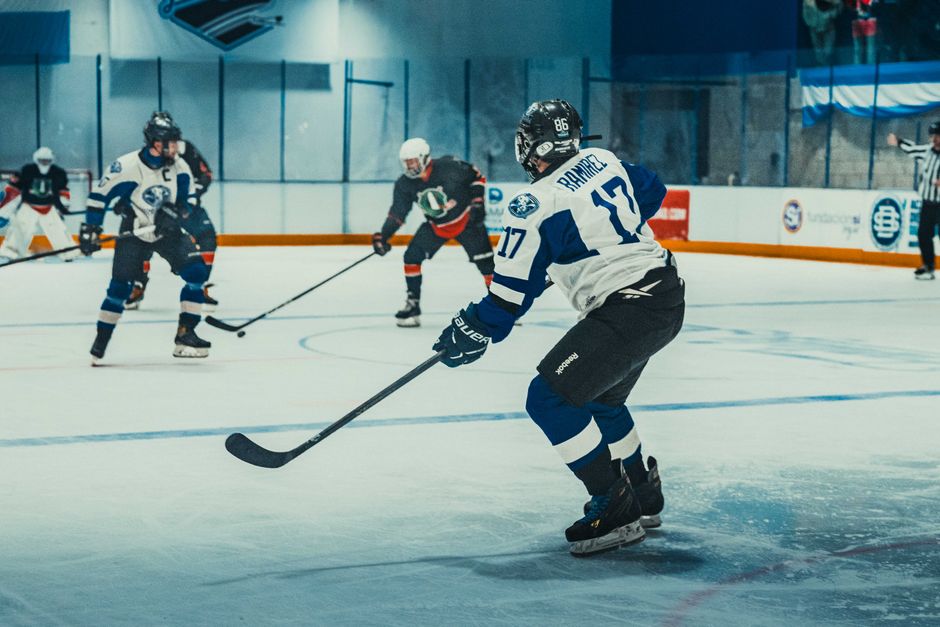
A slap shot in ice hockey is a powerful shot made by bringing the stick back, striking the ice just before the puck, and flexing the stick to launch the puck toward the net. The technique creates more force than most other hockey shots, but it usually takes longer to prepare and is harder to control.
How a slap shot works
The player begins with the puck slightly ahead of the body and the stick positioned behind it. As the stick comes down, it hits the ice first. The shaft bends and stores energy, then releases that energy through the blade and into the puck.
A basic slap shot includes these movements:
- Wind-up: The player raises the stick to generate power.
- Downward swing: The blade strikes the ice a short distance behind the puck.
- Flex and release: The stick bends as it loads against the ice and transfers energy to the puck.
- Follow-through: The blade points toward the intended target after contact.
Good technique is not only about swinging as hard as possible. Body rotation, weight transfer, stick flex, blade contact, and the direction of the follow-through all affect the shot’s speed and accuracy.
Why players use a slap shot
Players use a slap shot when they have enough time and space to load the stick. It is especially common from the point, where defensemen may shoot through traffic after a faceoff or during a power play. Forwards can also use a slap shot from the tops of the circles or on a one-timer.
The main advantage is power. A well-executed slap shot can travel quickly and be difficult for a goaltender to track, particularly when another player screens the view or redirects the puck. Its main weakness is the wind-up, which can give defenders time to block the shot or challenge the shooter.
Slap shot compared with other hockey shots
A wrist shot is released with a shorter motion and generally offers better accuracy and concealment. A snap shot uses a quick loading and release motion, giving the shooter a useful balance of speed, power, and surprise. A backhand shot is taken from the opposite side of the blade and is often useful when the player cannot easily turn for a forehand attempt.
The slap shot is usually the most obvious of these options because of its large wind-up. That makes it valuable when maximum force matters, but less practical in close quarters or during a fast break.
What is a one-timer slap shot?
A one-timer is a shot taken immediately after receiving a pass, without first settling the puck. A one-timer slap shot is difficult to defend because the goaltender has less time to set up and the shooter does not give away the release with a long pause.
On a power play, teammates often move the puck across the offensive zone to create a passing lane for a one-timer from the point or the faceoff circle. Timing and positioning matter as much as raw shooting strength.
Does a slap shot always go faster?
Not necessarily. A slap shot has a high power ceiling, but a wrist shot or snap shot can be more effective if it is released sooner, aimed more accurately, or hidden from the goaltender. The best shot depends on the player’s position, the defensive pressure, the available shooting lane, and the time before a defender can react.
For that reason, hockey players practice several types of shots rather than relying only on the hardest possible slap shot.