Why Do Ice Hockey Players Tape Their Sticks?
Hockey players tape their sticks to improve puck control, protect the blade, adjust grip, and manage moisture. Here is what each part of the tape job does.
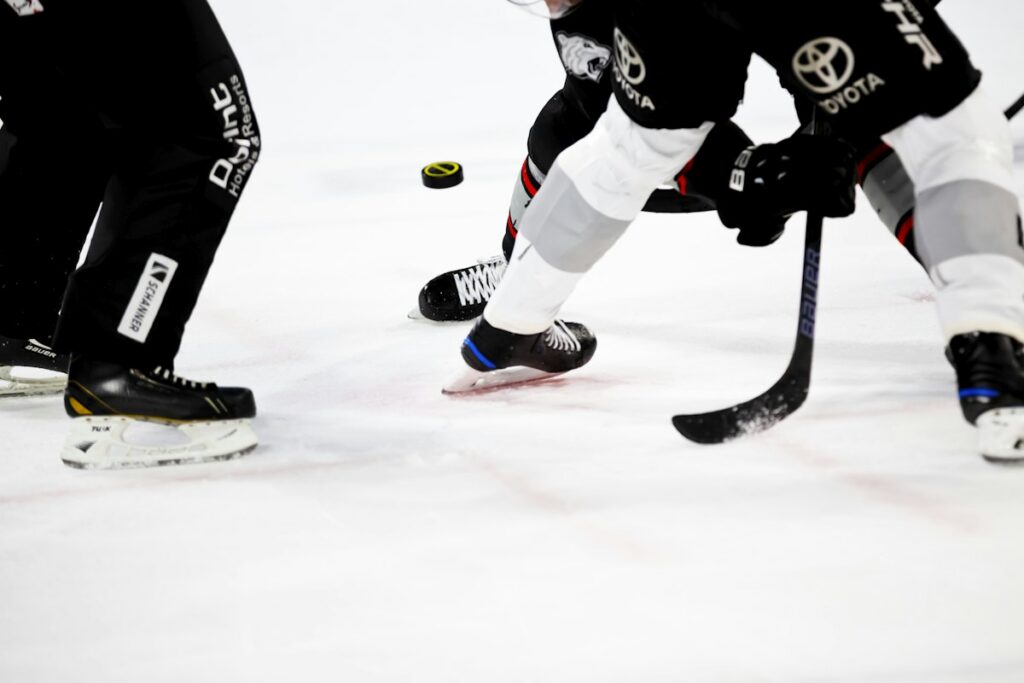
Ice hockey players tape their sticks for more than appearance. Tape changes how the stick feels in the hands, helps the blade interact with the puck, and protects equipment from repeated contact with ice, boards, skates, and opponents.
Why hockey players tape the blade
The most visible reason for taping a hockey stick is to improve contact between the blade and the puck. A taped blade can provide a more predictable feel during passing, receiving, stickhandling, and shooting. The tape also adds a small amount of friction, which helps a player keep the puck settled on the blade instead of letting it slide unpredictably.
Blade tape can also reduce glare from a bright, untreated blade. This is a minor benefit compared with puck feel, but some players prefer a darker blade because it makes the puck and blade easier to track in changing rink light.
How stick tape protects the blade
The bottom edge of a hockey stick takes constant punishment. It scrapes over rough ice, strikes the boards, contacts skates, and absorbs force when a player battles for the puck. Tape creates a replaceable outer layer that helps limit surface scratches, small chips, and moisture exposure.
Tape cannot repair a cracked or structurally damaged stick. Once the blade has a serious split, feels soft, or has changed shape, replacing the stick is safer than adding more tape. Players often retape the blade because the old layer becomes wet, torn, dirty, or loose during use.
Why players tape the handle and knob
Taping the top of the stick gives the upper hand a more secure grip. The knob prevents the hand from sliding off the end of the shaft, especially during powerful shots, faceoffs, and contact along the boards. It also helps a player locate the stick without looking down.
The size and shape of the knob are personal preferences. A larger knob may feel more secure, while a smaller one can allow quicker hand movement. Some players add tape lower on the shaft as well, creating a grip area for the bottom hand. Others leave part of the shaft bare so the lower hand can slide more freely while stickhandling.
Does tape improve shooting and puck control?
Tape does not automatically make a shot harder or a player more skilled. Its effect is mainly about consistency and feel. A player who likes the friction and texture of a taped blade may find it easier to control the puck, load a wrist shot, or receive a pass cleanly.
Different tape jobs suit different preferences. A tight, smooth layer may provide a consistent surface, while a thicker or more textured application can produce a different feel on the puck. The amount of tape, its condition, the blade material, and the player’s technique all affect the result.
Why hockey stick tape gets wet and dirty
Ice shavings, melted water, snow from the crease, and moisture from the rink quickly collect on blade tape. Wet tape can become heavier and may lose its original texture. Dirt and puck marks also wear down the fibers, especially along the toe and bottom edge.
For that reason, many players change the blade tape regularly rather than waiting for it to come completely loose. Some dry the stick after a game, but heat should be used cautiously because excessive heat can damage the shaft, adhesive, or blade construction.
Are there rules about taping a hockey stick?
Players generally may tape the blade and handle, but equipment rules can limit what is allowed. Tape that is unusually long, distracting, or used to create an unfair advantage may be restricted by a league or tournament. Stick dimensions, blade curvature, and illegal modifications are usually regulated more strictly than ordinary tape color or application.
Before a game, players should check the rules for their competition. Youth, amateur, school, and professional leagues may interpret equipment requirements differently.
Common questions about taping hockey sticks
Why do hockey players tape the blade from heel to toe?
Many players wrap the blade from the heel toward the toe to cover the playing surface evenly and create a consistent overlap. The exact direction is a preference rather than a universal requirement.
Why do some players use white tape and others use black tape?
White tape is traditional and can make puck marks less noticeable, while black tape gives the blade a darker appearance and may reduce visual contrast with the puck for an opponent. Neither color makes a player automatically better.
How often should a hockey stick be retaped?
Retape the stick when the tape is wet, torn, loose, heavily worn, or no longer feels consistent. Some players change it every game; others keep the same tape job for several sessions if it remains in good condition.