Why Is There a Trapezoid Behind the Hockey Net?
The trapezoid is a restricted area that limits where a goaltender can play the puck behind the net. Learn why the NHL uses it, how the rule works, and what happens when a goalie leaves the permitted area.
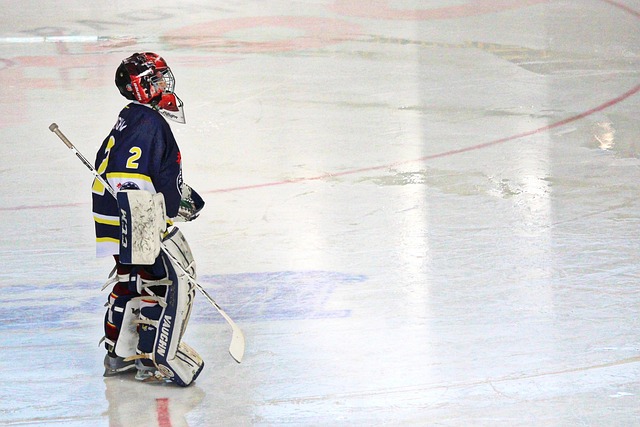
The trapezoid behind a hockey net marks the area where the goaltender is allowed to play the puck behind the goal line. Inside the trapezoid, the goalie can leave the crease to stop a dump-in, make a pass, or help start a breakout. Outside it, in the corners behind the net, playing the puck can result in a penalty.
The marking is mainly associated with the NHL. Its purpose is to stop goalies from acting like an extra defenseman anywhere in the zone and to give forechecking players a better chance to pressure dumped-in pucks.
How the goalie trapezoid rule works
The restricted area sits behind the goal line and is bounded by two diagonal red lines that extend toward the end boards. It is wider near the goal line and narrower near the boards, which gives it the shape of a trapezoid.
A goaltender may handle the puck behind the net when it is inside this marked area. The goalie may also play the puck in front of the goal line, including around the crease. The restriction applies to the space behind the goal line outside the trapezoid, particularly the corners.
If a goalie deliberately plays the puck outside the permitted area behind the net, the result is normally a minor penalty for delay of game. The restriction is about where the goalie plays the puck, not about where the goalie’s skates happen to be. A goalie can move through the corners, for example, without automatically committing a violation if they do not play the puck there.
Why hockey introduced the trapezoid
Before the restriction, some goaltenders were highly effective at leaving the crease to retrieve long shots and make accurate passes. That could cancel out dump-and-chase tactics before forecheckers had time to arrive. A goalie with strong puck skills effectively gave the defending team an extra outlet player.
The NHL introduced the goalie trapezoid after the 2004–05 lockout, beginning with the 2005–06 season. The change was part of a wider effort to create more offense and make it harder for teams to neutralize pressure with routine dump-ins.
Limiting the goalie’s range creates a small but meaningful risk for the defending team. A defenseman may have to retrieve the puck instead, and that player can be pressured along the boards. The attacking team therefore has more opportunity to win possession, force an error, or keep the puck in the offensive zone.
What the trapezoid changes during a game
The rule affects several common situations:
- Dump-ins: A goalie can still stop a puck in the trapezoid, but cannot freely collect it in either corner.
- Forechecking: Attackers can pressure defensemen because the goalie is less able to retrieve and pass every loose puck.
- Breakouts: Defensive players must make more of the first pass when the puck travels outside the restricted area.
- Late-game pressure: Teams protecting a lead may choose safer clears because an awkward puck retrieval can create a turnover.
The trapezoid does not prevent a goalie from stopping the puck anywhere. It only limits deliberate puck handling behind the goal line. A shot that reaches the corner remains playable by skaters, even if the goaltender cannot legally handle it there.
Is the trapezoid the same as the goalie crease?
No. The blue-painted crease protects the area immediately in front of the net and helps define restrictions on how attacking players may interfere with the goaltender. The trapezoid is a puck-handling restriction behind the net.
A goalie can leave the crease and play the puck in the trapezoid. Conversely, a goalie can be outside the crease without breaking the trapezoid rule, provided the puck is not played in the forbidden area behind the goal line.
Do all hockey leagues use a trapezoid?
Not necessarily. The exact rink markings and goalie puck-playing rules depend on the league and competition. The trapezoid is especially familiar to NHL viewers, while international, professional, junior, collegiate, and recreational rules can differ.
That is why a goalie may appear to handle the puck legally in one competition but face a restriction in another. Before applying the NHL goalie trapezoid rule to another league, check that competition’s current rulebook.
Common questions about the hockey trapezoid
Can a goalie play the puck outside the trapezoid in front of the goal line?
Yes. The specific restriction concerns the area behind the goal line. A goalie may handle the puck in front of the goal line, subject to the other rules of the game.
Can a goalie skate through the corner?
Yes, skating through the corner is not by itself a violation. The problem occurs when the goaltender plays the puck in the restricted area outside the trapezoid.
Why do some fans dislike the trapezoid?
Critics argue that the rule limits skilled puck-handling goalies and can create confusing penalty decisions. Supporters believe it improves forechecking opportunities and produces more contested puck retrievals. The disagreement reflects a broader choice between rewarding goalie playmaking and preserving offensive pressure.
What is the simplest way to remember the rule?
Behind the net, the goalie can play the puck in the trapezoid, but not in the corners outside it. The crease and the trapezoid serve different purposes, and the markings may not be used identically in every league.