Why Do Ice Hockey Players Wear Jerseys Over Pads?
Ice hockey jerseys are designed to fit over shoulder pads, elbow pads, and other equipment while helping officials, teammates, and spectators identify each player.

Ice hockey players wear jerseys over pads because the jersey is part of the sport’s uniform, while the protective equipment underneath must stay in place during fast, physical play. The outer layer also displays the team’s colors, player number, and name, making identification easier for teammates, officials, and spectators.
What does an ice hockey jersey cover?
A hockey jersey is cut larger than an ordinary shirt so it can fit over shoulder pads, elbow pads, and the base layers worn underneath. These pads protect areas that are exposed to checks, falls, pucks, and contact with the boards.
The shoulder pads add width around the upper body, while elbow pads extend along the arms. A standard hockey jersey has loose sleeves and a broad torso to accommodate both without restricting skating, stickhandling, or shooting. The fabric is usually lightweight and breathable because players generate substantial heat during a shift.
Why not wear the jersey under the pads?
Putting a hockey jersey under the protective equipment would make the gear harder to fit and could interfere with movement. Shoulder and elbow pads are shaped to sit directly against the player’s base layer, allowing their straps and protective shells to stay in the correct position.
A jersey underneath the pads could also bunch up, create uncomfortable pressure points, and become trapped beneath straps. Wearing it on top keeps the equipment secure and leaves the jersey visible without changing how the protection is positioned.
How jerseys help identify players
Player identification is another major reason hockey jerseys are worn over pads. Each jersey normally includes a team logo, color scheme, player number, and often the player’s surname. Officials use these details when recording penalties, goals, assists, and substitutions.
Clear numbers matter because hockey moves quickly and players may be seen from behind, across the rink, or through the boards. Teammates can also recognize passing options more easily, while spectators and broadcasters can follow individual players during live action.
Why the jersey must fit correctly
A hockey jersey should be roomy enough to cover the shoulder and elbow pads but not so loose that it catches on equipment or obstructs movement. League rules may specify limits for jersey dimensions, sleeve length, or how the garment must be secured.
Players typically tuck or fasten the jersey in a way that keeps it from riding up during contact. A jersey that is too tight can restrict the arms and shoulders. One that is excessively loose can snag on another player’s stick or make the number difficult to see.
Do goalies wear jerseys differently?
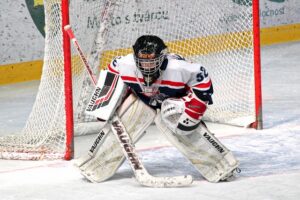
Goalie jerseys are usually much wider in the arms and torso than skater jerseys. A goaltender wears larger chest and arm protection, so a regular player jersey would not provide enough room. The oversized cut lets the goalie move while covering the equipment and presenting the team’s colors and number.
Although the fit is different, the purpose remains the same: the jersey sits over the protective gear, identifies the player, and completes the team uniform.
Are hockey jerseys mainly for appearance?
No. The visible design is useful, but the jersey also has practical purposes. It helps keep loose equipment and base layers covered, supports team identification, and is shaped for movement over bulky pads. It is not intended to provide the main protection; that comes from the shoulder pads, elbow pads, helmet, gloves, pants, shin guards, and other protective equipment.
In short, the answer to “why do ice hockey players wear jerseys over pads” is a combination of safety-equipment design, freedom of movement, player identification, and uniform rules. The pads need to sit close to the body, while the jersey needs to remain visible and flexible over them.